

International Monetary Monitor is a specialist research and publication platform focused on global economics, monetary policy, and financial analysis. The goal of this project was to create a website that reflects authority and credibility while making long-form written content easy to navigate, read, and explore.
It was essential that the site function well for readers as well as for the publishers, so they could easily upload new articles as they liked without needing assistance.
I developed a modern, structured platform designed to support ongoing publishing, clear content hierarchy, and a growing library of insights. The result is a professional digital presence built for trust, usability, and long-term scalability, helping research-driven organisations present their work with professionalism and clarity.
I handle ongoing management of this website as well as potentially expanding it in the future.
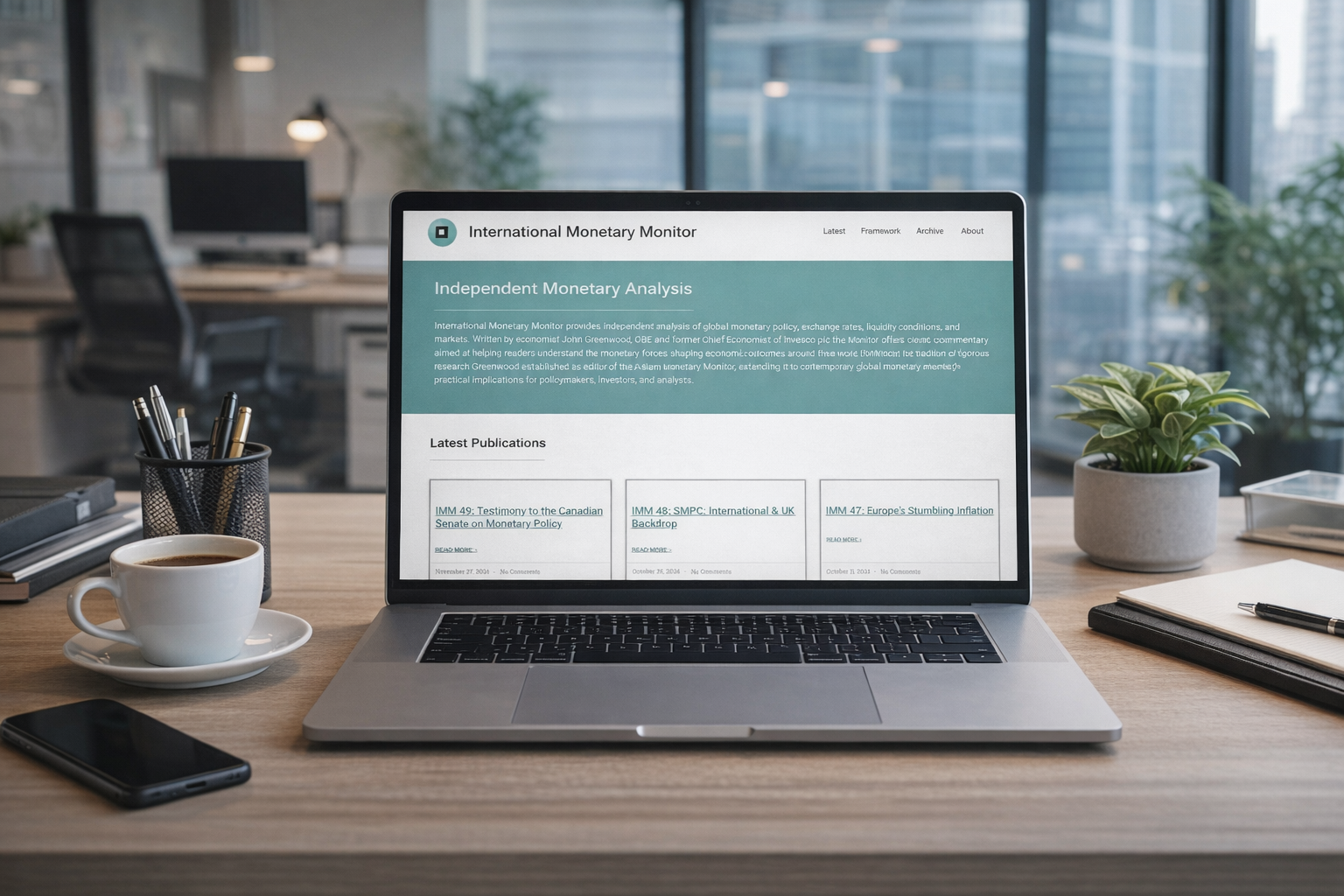
Beyond standard maintenance, ongoing support included publishing articles and updates, managing website content, refining page layouts, and helping maintain a professional and credible online presence for the International Monetary Monitor.
Reliable website hosting and ongoing maintenance ensured the International Monetary Monitor website remained secure, stable, updated, and accessible for readers worldwide, while supporting long-term performance and day-to-day reliability.
A professional custom website was designed and developed to present the International Monetary Monitor’s publications, research, and archive content in a clear, structured, and accessible format across desktop and mobile devices.
Read more
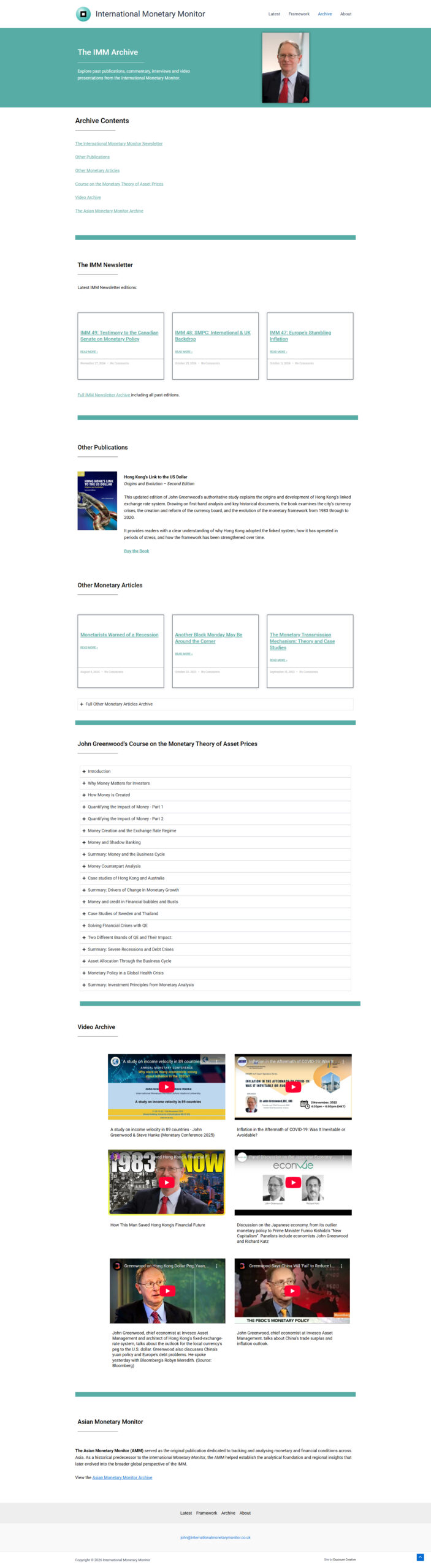
The primary goal of this project was to present the International Monetary Monitor in a way that feels professional, credible, and appropriate for a long-standing research publication. The design avoids visual excess and focuses on clarity, consistency, and structure, allowing the work itself to convey authority. Layout, typography, and spacing were chosen to support serious reading and reference use rather than to attract attention through stylistic devices.
Given the volume and range of material published by the International Monetary Monitor, highlighting clarity of navigation was essential. Content is organised into clearly defined sections so readers can quickly locate newsletters, articles, courses, and archived material without confusion. The structure is intentionally conventional, reducing cognitive load and ensuring the site remains easy to use for both new and returning readers.
The website was built to support regular publication and long-term content management rather than one-off updates. Custom post structures and consistent templates make it straightforward to publish new articles, newsletters, and archival material while maintaining a coherent layout across the site. This allows content to grow organically without requiring structural changes or manual formatting each time new material is added.
Video content is integrated in a way that feels native to the site rather than embedded as an afterthought. YouTube videos are presented within the same visual system as written content, ensuring consistency while allowing media to be updated or expanded externally without affecting site performance or layout stability.
The site also supports downloadable resources, including publications and reference material, with clear presentation and predictable access points. This ensures readers can easily engage with longer-form material while preserving a structured, dependable experience across different content types.
The site makes sparing use of the organisation’s teal brand colour to provide subtle visual cues without overwhelming the content. Colour is used to reinforce hierarchy and orientation rather than decoration, supporting a calm and consistent reading experience. This restrained approach helps maintain a neutral, authoritative tone and ensures the design remains durable over time.
Following launch, I continue to support the International Monetary Monitor as an active publication rather than a static website. Ongoing work focuses on ensuring the site remains stable, reliable, and easy to maintain as new material is added over time.
This includes managing technical updates, maintaining compatibility with hosting and platform changes, and supporting the publication of new articles, newsletters, video content, and downloadable material. The emphasis is on preserving consistency and avoiding disruption, so the structure and presentation remain familiar to regular readers.
Rather than periodic redesigns or feature-driven changes, updates are handled incrementally and with restraint. This approach ensures the website continues to function as a dependable archive and publishing platform, aligned with the long-term nature of the work it hosts.
Websites for financial research and publication platforms require a very different approach to standard business websites. The priority is not just presentation, but structure, clarity, and long-term usability.
Content is often complex. Articles, reports, and insights need to be organised in a way that allows readers to quickly understand what is relevant to them, whether they are scanning headlines or reading in depth. Clear categorisation, logical navigation, and strong readability are essential.
There is also a strong emphasis on credibility. For economists, analysts, and financial professionals, the website itself becomes part of the brand. It needs to feel structured, reliable, and authoritative without becoming heavy or difficult to use.
Search visibility plays an important role as well. Research and publication websites benefit from well-organised content that can be indexed properly, allowing individual articles and topics to rank over time and generate ongoing traffic.
This is where a more considered approach to website design becomes important. Rather than focusing purely on visuals, the goal is to create a platform that supports structured content, communicates expertise clearly, and continues to perform as more material is published.
If you are building a platform for financial research, publications, or professional services, the structure of your website matters just as much as the design.
Whether you are an economist, analyst, consultant, or part of a research organisation, your website should present your work clearly, support ongoing content, and reflect the level of expertise behind it.
I work with professionals who need more than a standard template. The focus is on understanding your work, structuring your content properly, and building a site that supports both credibility and long-term growth.
If you are planning a similar project, feel free to get in touch.
Exposure Creative designs websites that look good and perform well for businesses, services and professionals worldwide. See more about Exposure Creative Web Design.
• User-friendly, conversion-focused design that guides visitors toward enquiries or bookings
• Clear brand messaging so the right people immediately understand what you offer
• Responsive design that works seamlessly across desktop, tablet, and mobile
• SEO-optimised structure, including clean page hierarchy and on-page best practices
• Solid technical foundations, with semantic HTML and schema markup where appropriate
• Properly optimised images for fast loading and strong visual impact
• Performance optimisation to keep load times fast and reliable
SEO focused website structure built for long-term visibility and growth
Practical, conversion-driven design that prioritises clarity, usability, and trust
One point of contact for web design and commercial photography, avoiding misalignments and streamlining the process
Original, authentic photography created specifically for your brand with your website needs in mind
Strong visual branding that enhances credibility, usability, and site performance
Geoff Greenwood is a web designer and website manager based in Cambodia, specialising in building and developing high-performing websites that generate traffic and convert visitors into customers.
His work focuses on long-term website growth through SEO, content development, and data-led optimisation, using tools such as Google Analytics to track performance and identify opportunities.
Alongside web development, Geoff has extensive experience in commercial photography, giving him a strong understanding of how visual content impacts user behaviour, engagement, and conversion.
This combination allows him to approach websites not just as design projects, but as evolving marketing assets built to perform over time.