Most boutique hotel websites fail at the same thing: they look like they were built by someone who understood websites but had never actually sold a hotel room. The result is a site that’s technically fine but does almost nothing to convert a visitor into a guest.
I’ve built hotel websites in Cambodia and across Southeast Asia, and I also work as a commercial photographer. That combination gives me a different perspective on this than most web designers. A hotel website isn’t just a design project. It’s a sales tool, and the sales process for a boutique hotel is almost entirely visual.
Here’s what your boutique hotel website actually needs to include, and why.
Photography That Does the Selling
Let’s start here because it’s the most important thing on the page and the most consistently underinvested.
A boutique hotel’s main competitive advantage over a chain property is atmosphere and character. Your website has roughly three seconds to communicate that before a visitor clicks away. That communication is almost entirely done through photography.
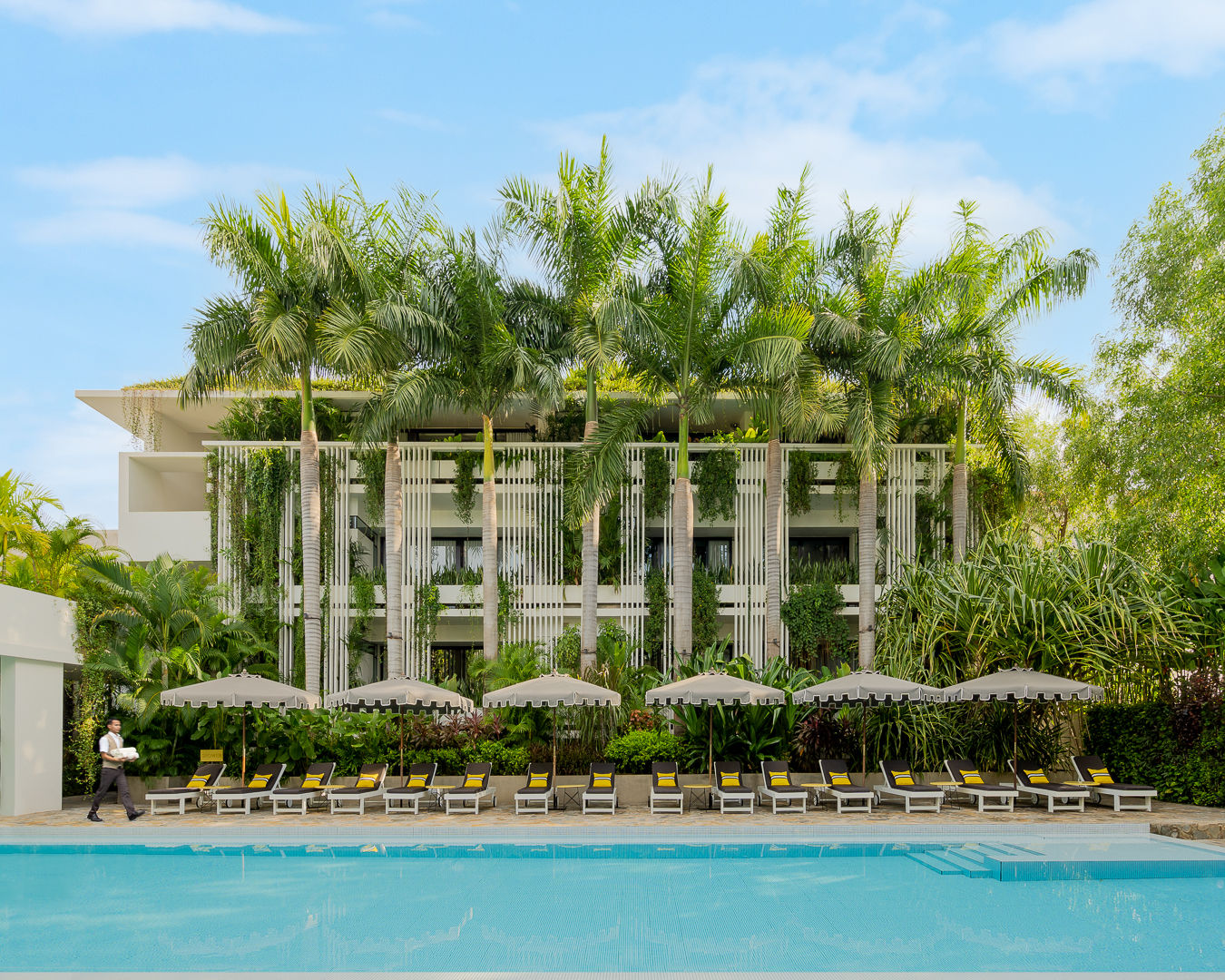
This means you need professional photography. Not smartphone shots, not photos taken by a well-meaning staff member with a decent camera. Properly lit, professionally composed images of your rooms, common areas, pool, restaurant, and the surrounding environment. The photography sets the emotional tone of the whole site. Get it wrong and nothing else matters.
For boutique properties specifically, the photography brief should capture the things that make your hotel different: the architectural details, the texture of a handmade textile on a bed, the quality of light at sunset from a specific terrace. These are the things guests are actually choosing you for.
One more thing: the images need to be optimised properly for web. Large uncompressed files kill page load speed, and slow sites lose guests before they even see the rooms.
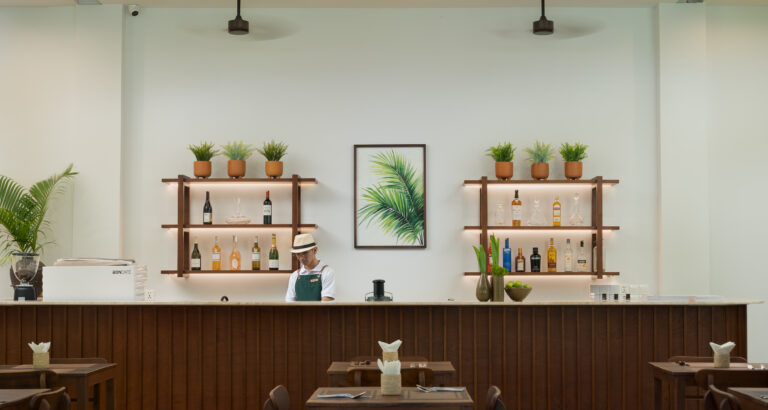
Boutique Hotel Photography of Viroth's Hotel, Siem Reap, Cambodia
Your website needs to let people book directly, without routing them to a third-party OTA. This is non-negotiable.
OTAs take a significant commission on every booking. Your own website should be converting visitors at a lower cost. A clean, simple booking engine integrated directly into your site means guests can check availability and reserve a room without leaving your domain.
The booking flow needs to be frictionless. Every extra click, every redirect, every confusing form field is a drop-off point. Keep it simple.
Room Pages That Actually Describe the Rooms
Generic room descriptions don’t work. “Deluxe room with air conditioning and wifi” describes every hotel room in the world.
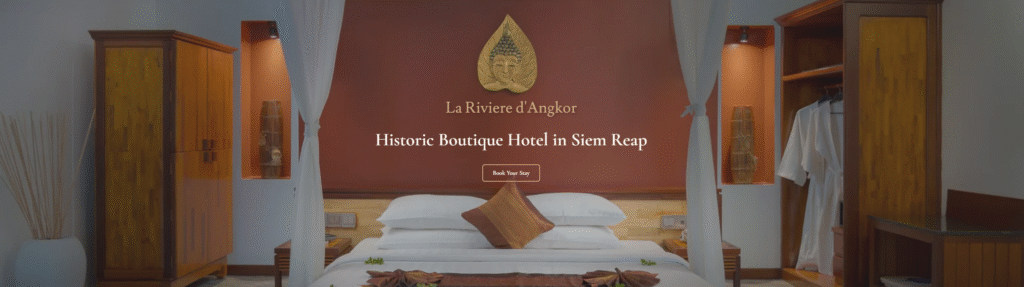
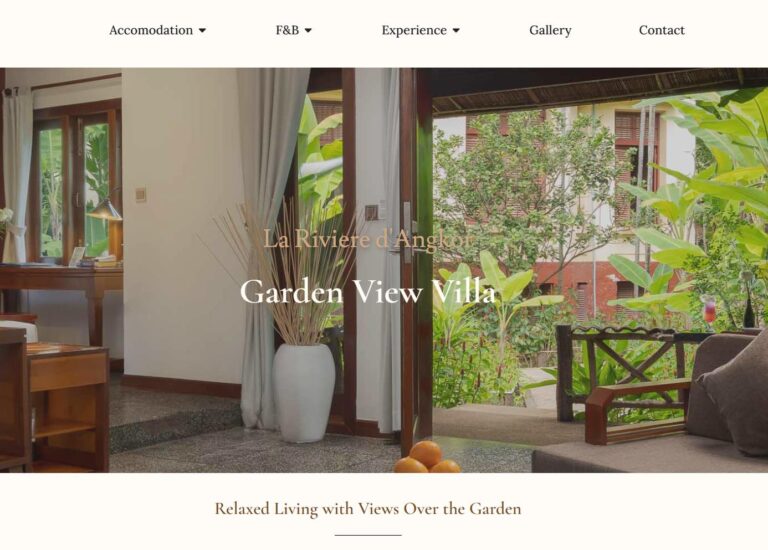
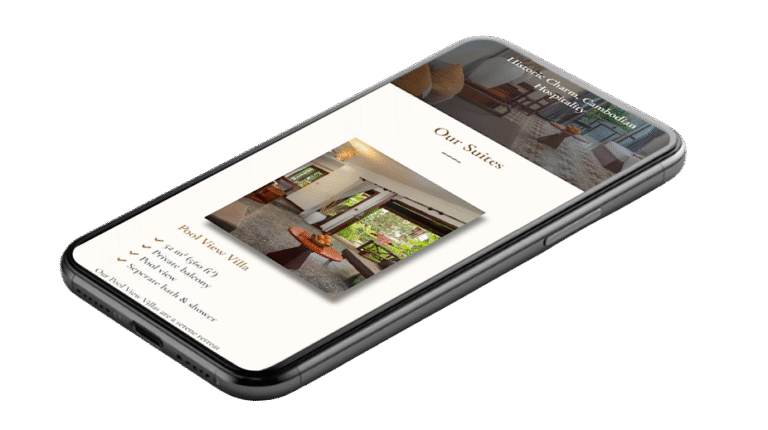
Each room type needs its own page or clearly defined section with specific details: the size, the bed configuration, the view, the specific amenities, what makes this particular room worth booking. If your rooms each have their own character, which they should for a boutique property, that character needs to come through in the copy.
Pair the copy with multiple photos of each room. Guests want to know exactly what they’re getting. Ambiguity creates hesitation, and hesitation kills bookings.
Your Story, Told Well
Boutique hotels exist because guests want something more personal than a chain. Your About page is where you deliver on that promise before they’ve even arrived.
This doesn’t mean writing a long corporate history. It means telling a clear, genuine story about what your hotel is, who created it, and why. What was the vision? What makes this place different from the fifty other hotels in your city? If there’s an interesting origin story, tell it. If there’s a design philosophy behind the property, explain it.
Keep it human and specific. Vague language about “creating memorable experiences” says nothing. Concrete details about why you chose to restore a colonial building or source all your furniture from local artisans says everything.
Location and Local Information
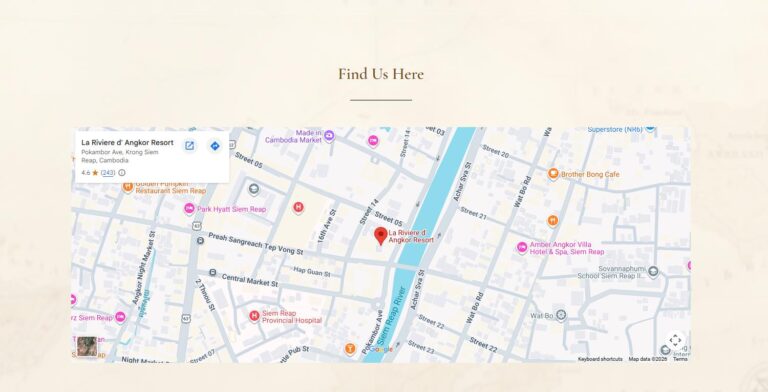
Guests want to understand where they are in relation to the places they plan to visit. A basic map is a start, but the more useful thing is a page or section that tells guests what the neighbourhood is like and what’s nearby.
What can they walk to? What’s worth making a trip for? If your hotel is in a location that rewards exploration, help guests see that. This kind of content also has SEO value, connecting your property to the specific destination searches that guests use when they’re planning a trip.
Reviews and Social Proof
Guests trust other guests. Featuring real reviews on your website, whether pulled from Google or TripAdvisor, or quoted directly, gives potential guests the reassurance they’re looking for before they commit to a booking.
Don’t bury this content. Reviews near your booking button or on individual room pages do more work than a dedicated testimonials page that nobody finds.
A Clear, Fast Mobile Experience
More than half of hotel searches happen on mobile. Your website needs to work properly on a phone: fast load times, readable text, a booking process that doesn’t require zooming and pinching, and a click-to-call button for guests who just want to pick up the phone.
If your site loads slowly or the mobile experience is clunky, you’re losing guests to a competitor before they’ve even read your room descriptions.
Contact Information That's Easy to Find
Email, phone number, WhatsApp if you use it. These should be visible on every page, not buried in a footer that requires scrolling. Guests have questions before they book, and if they can’t find a way to ask them quickly, they’ll move on.
What Most Hotel Websites Get Wrong
The most common mistake is treating the website as a digital brochure rather than a sales tool. A brochure informs. A website should convert.
That means every element of the site, from the photography to the room descriptions to the placement of the booking button, should be working toward getting a visitor to make a reservation. Good design supports that goal. Bad design, or generic design, gets in the way of it.
The second most common mistake is launching a site with poor photography and telling yourself you’ll replace it later. You won’t. Or you will, but by then the site has already been doing quiet damage for months. Start with proper photography. Everything else can be refined over time.
Working With a Web Designer on Your Hotel Site
If you’re planning a new website or a redesign, the brief you give a designer matters enormously. Be clear about your positioning, your target guest, and what makes your property different from the competition. The more specific you are, the better the outcome.
For hospitality projects, I’d strongly recommend working with a designer who has actual photography experience or who can coordinate the photography alongside the build. The two are deeply connected, and separating them usually produces a worse result for both.
If you’re running a boutique hotel and thinking about a new website, I’m happy to have a conversation about what that might look like. You can get in touch through the contact page.